Debut trials in India with Dynapac’s digital compaction technology
24 August 2011
The first trials in India with the Dynapac Compaction Analyser are being undertaken in Pune and look set to revolutionize the way in which highway construction work is undertaken.
|
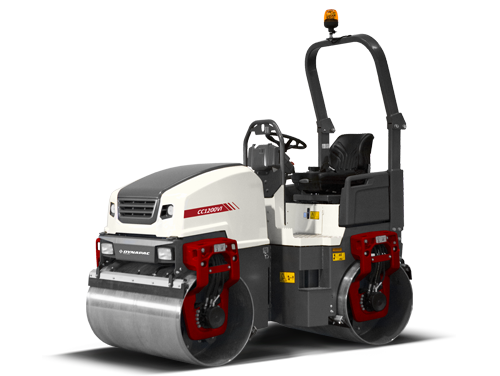
Digital compaction technology has been introduced to India by Dynapac, with the delivery of a total of 10 soil and asphalt vibratory compaction rollers to five contractors in Mumbai for use in trials on road and highway projects in Pune. The rollers are equipped with sensors that relay data to the cab where the operator can monitor progress on a screen - the information also being transmitted via a wireless broadband connection to the contractor and the client, where it is analyzed for performance. Manufactured by Dynapac in Sweden, the DCA (Dynapac Compaction Analyzer) system is unique to Dynapac and can be fitted to any machine in the soil and asphalt compaction ranges. Pune is the largest city in India’s Western Ghats and has a growing industrial hinterland, with many information technology and automotive companies setting up factories in the district. Consequently there is an active programme to upgrade the infrastructure, including highways, urban roads and flyovers. Dynapac, which in India is a division of Atlas Copco (India) Pvt Ltd, based in Pune, is carrying out the trials in cooperation with the highways division of PCMC (Pimpri Chinchwad Municipal Corporation). “Dynapac is the first company in India to introduce intelligent compaction, and we have just started this year,” says K Vasudevan, Dynapac’s Business Manager for road construction equipment. “We believe it is a logical progression. Indian companies making asphalt and concrete have sensors on their batching plants and trucks to relay the information to a central point for storage and analysis, so the supply of data on the actual compaction depths and the number of passes provides the extra crucial link to ensure a quality surface.” “This also works for soil compaction, because although there is not the need for monitoring incoming materials, the depth and quality of the compaction are equally important to provide stability to the road base.” One of the first contractors to use DCA is PBA Infrastructure Ltd, based in Mumbai, who has just taken delivery of a new 11 t CA250 single-drum soil compactor and a 9.4 t CC384 tandem roller. Both machines were assembled at Dynapac’s factory at Nasik in India and equipped with the Swedish-made DCA. “We believe this could change the way in which highway construction is carried out in India,” says Deepak Wadhawan, Executive Director of PBA Infrastructure. For the first time, a client will be able to study road compaction data on his own computer monitor in his own office, and see how well the job is being done. He will be able to read data on road base compaction, monitor the volume of asphalt that leaves the batching plant, and see that the specified number of passes is being used to achieve the necessary compaction. This will usher in a new era of quality for India’s highways, and with infrastructure being such an important part of the country’s growth and development, this system is very timely indeed. “We ourselves have only just taken delivery of our machines and we shall be working closely with Dynapac and PCMC.” Along with PBA Infrastructure there are four other contractors in Mumbai who have taken delivery of Dynapac compactors with the DCA system for working on projects in Pune. Thakur Infra Proects Pvt Ltd has a CC384 and a CA250; Ajwani Infra Construction Ltd has one CA250 and three CC384 machines; J Kumar Infra Project Ltd has a CA250; and Jitender Singh Group also has a CA250. All the compactors are Indian-built. Thakur is currently using its CC384 on the construction of the Bhosari flyover near Pune city centre. The 1.6-km flyover has a 9-m wide carriageway. On the site, plant and equipment manager Vishwanath Gupta says that the asphalt is being applied in three layers. The bottom layer is 300 mm thick and requires between eight and 10 passes, the middle layer is between 50 and 100 mm thick and requires the same compaction, while the final top layer is between 25 and 50 mm and requires six passes. The sensor is placed at the front of the machine, just above the drum, while the screen is to the right of the driver in the cab and the GPS transmitter is mounted on the machine roof. “The system works in our favour,” says Mr Gupta. “It shows exactly how many passes we are making and at which temperature. It also indicates how much time we are spending. This gives us greater accuracy, tighter control, and can save us time, fuel and money.” Operator of the CC384 at the Bhosari flyover is Phatan Jalil, who works a 10-hour shift every day, and who says the system is very easy to use. “I have no problem monitoring the screen as I’m working, and it helps me because I can see exactly which parts of the surface I have worked on, and how many passes I have done,” he says. “There is no chance of making a mistake by missing a section of the surface or making an incorrect number of passes.” Following the trials at Pune, Dynapac anticipates fleet owners in other parts of India to take up the system.
For further details please contact: Lotta Bynke, Dynapac AB |
|
Atlas Copco Road Construction Equipment is part of the Construction Technique business area. The division is a leader in asphalt, soil and concrete applications, committed to customer performance worldwide. Products and solutions are marketed under the Dynapac and complementary brands. Headquartered in Stockholm, Sweden, the division has production facilities in Europe, USA, South America, and Asia.